Sorghum: An Ancient Relative pt 2
May 3, 2025
the following is a repost of this year’s grant reports shared with Going to Seed, a national non-profit focused on supporting landrace gardening. They were generous enough to support our sorghum breeding project for 3 years, 2024-2026.
Peace y’all, Dominique here with Coyote Gourd Farms out in South Central Los Angeles. I’m focusing on multi-use perennial sorghum for the backyard gardener/urban subsistence grower. I grow on a quarter acre across 4 plots around the city, and we focus on drought tolerant African heirlooms from around the diaspora.
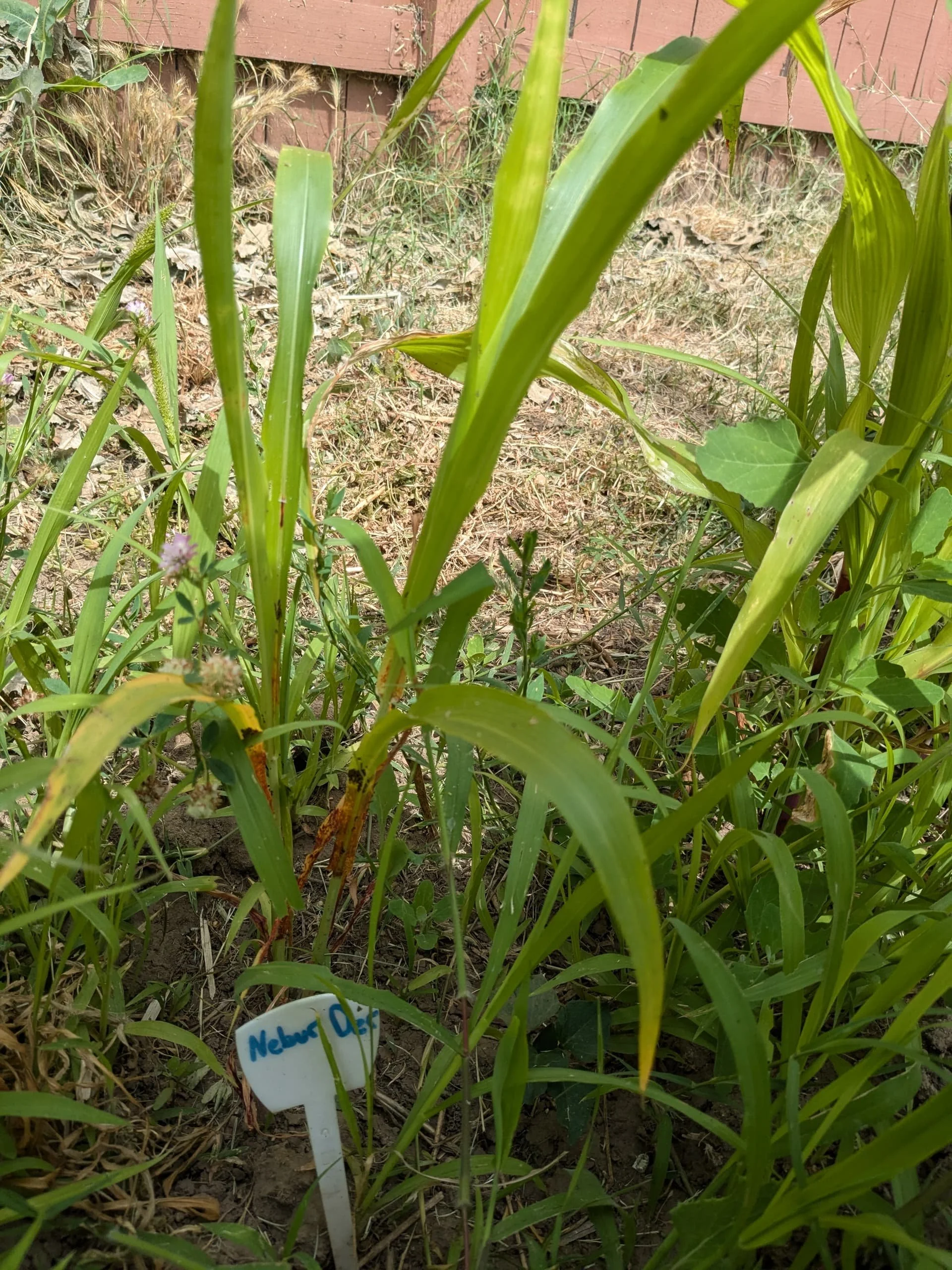
One of our young sorghum plants, variety Nebur Der from Malakal, South Sudan
Sorghum is a traditional African grain with uses beyond what we’re familiar with. Feed, syrup, popped sorghum, fresh and storeable grain, with a tolerance to arid climates that is unrivaled by her close cousin, Sister Corn. Ideally a perennialized sorghum is low input (re:fertilizer and effort), high reward, and nutritious to the bodies and spirits of African people who are looking to uplift our traditional foods we have lost some access to.
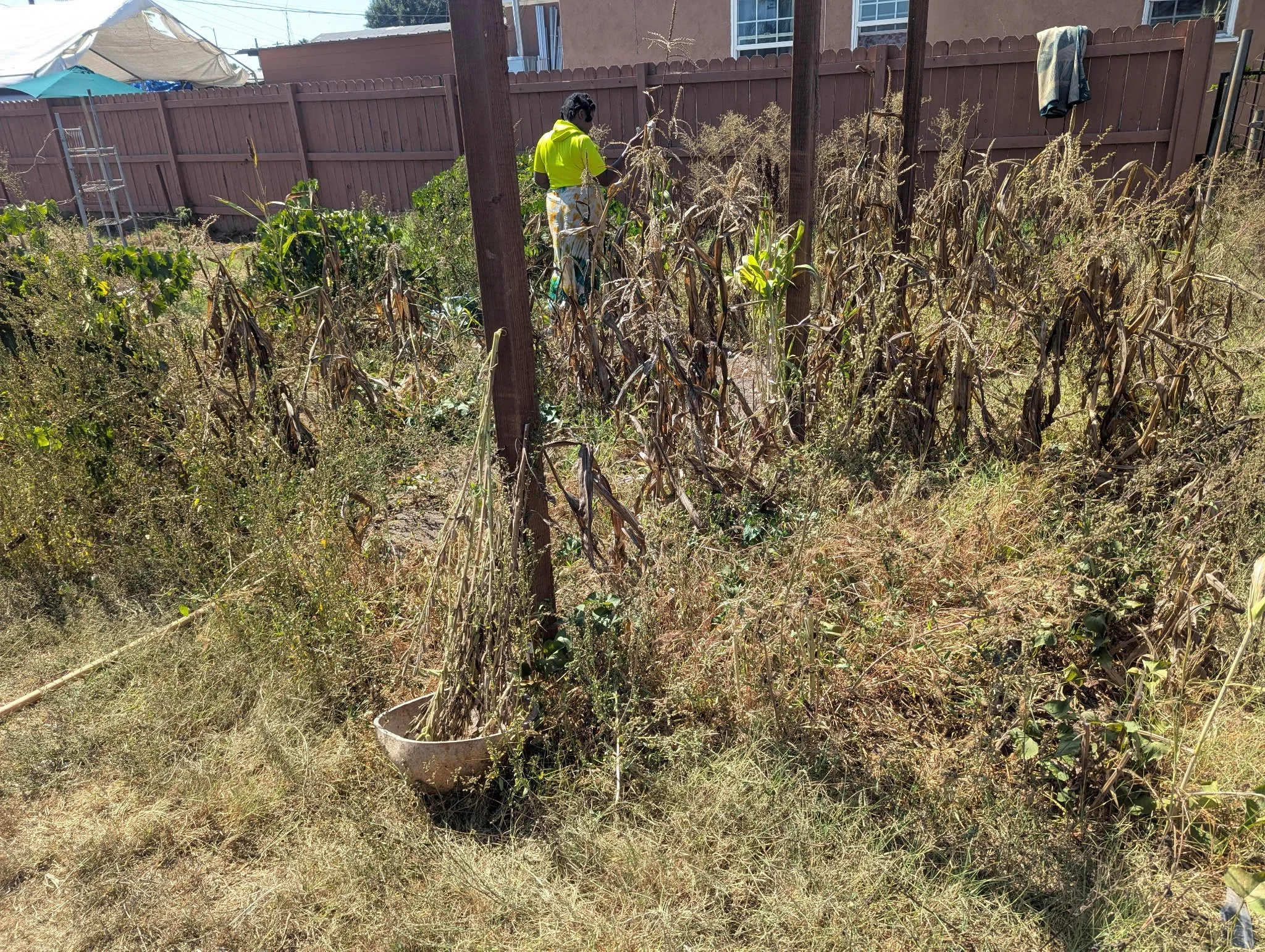
Our Sorghum field at time of harvest; a calabash of freshly harvested sesame is visible
I have 16 varieties planted, from varying nations in West, East and North Africa, as well as the US South and Southwest, where Pueblo folks have adopted this grain and grown it without irrigation for generations as well. Our first grow out is to increase seed supply, and determine which varieties are best suited to the climate (i.e which survive). Our subsequent grow outs will test for taste, multipurposeness, and we’ll do intentional work to look for crosses, and to increase the chances through some mechanical pollination support. By the third year, hopefully perenniality of some of the varieties will become clear!