Sorghum: An Ancient Relative
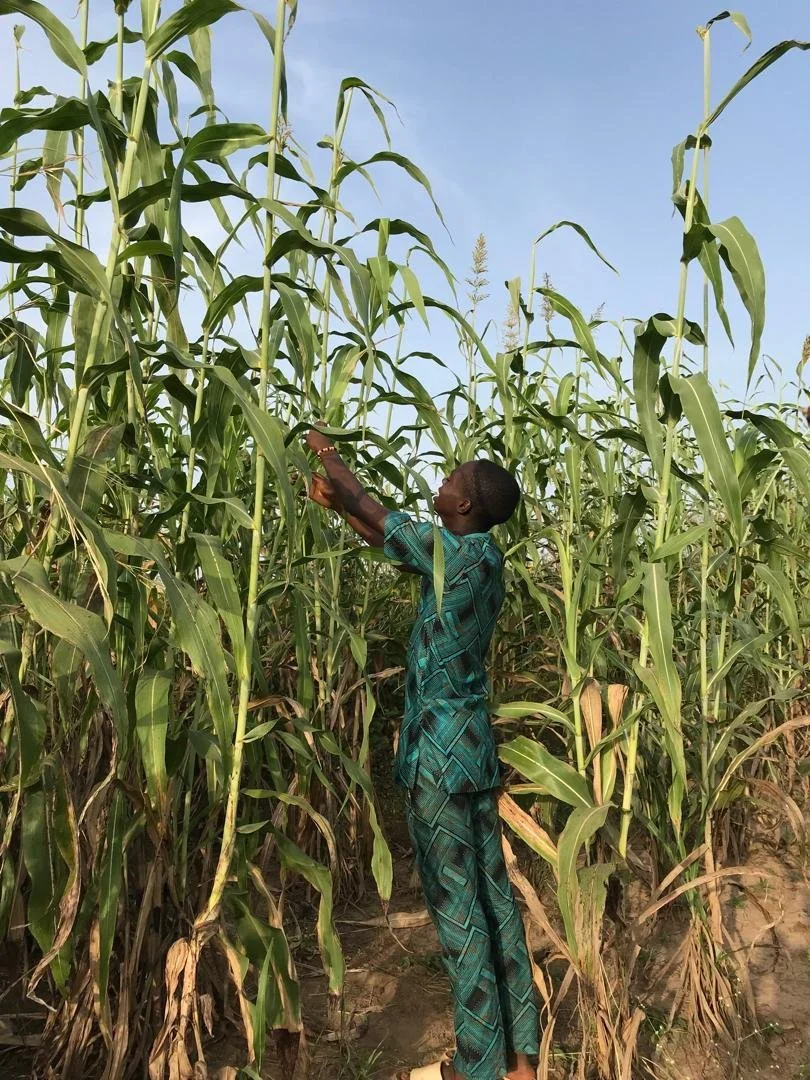
The first sorghums I saw were 20 feet tall.
You think I’m exaggerating, but I’m not. The sorghum was so tall I thought I could climb it.
I was in Paga, Upper East, Ghana, driving to visit some friends for the week, and we were introduced to the incredible majesty of sorghum, or red millet. Later, I would learn of all the different ways she could feed us, from popped like corn to cooked like rice, to ground into flour or brewed into delicious pito, but I new she was a special plant even before I ever got a chance to really get to know her.
Sorghum (sorghum bicolor), also called red millet or Great Millet, is indigenous to North East Africa. Domesticated in Ethiopia, Chad, and the Sudan, almost 7000 years ago, we believe it spread from the highlands of Ethiopia throughout the rest of the continent.
Boiled or steamed sorghum is eaten throughout Africa, and is commonly an ingredient for breads, fermented foods, porridge, or couscous throughout West Africa especially. Widely consumed as syrup or used for animal feed in the US, sorghum is a nutritious and gluten free grain that can be eaten in a wide variety of ways. Folks in India eat it green, as a vegetable; folks in Ghana pop it like popcorn, folks in Nigeria eat it as pap, like grits in the morning. Likely our collective appetite for grits and cornmeal as Black Americans stems from, at least in part, a remembering of sorghum as an ancient all-purpose grain.
Sorghum is also grown by small family farmers throughout Ghana and West Africa, folks who often farm on an acre or less of land and feed whole families, which is why it sparked my interest as a community plant breeder. A grain that could be grown on a small scale and feed big families? And one whose gluten free properties aligned with our ancestral diets? That feels like something the hood could use…
Learn more about our sorghum breeding project in the following posts: Sorghum: An Ancient Relative pt 2, 3 and 4.